In recent years, peptides have become a central focus in the study of aging mechanisms and cellular longevity. Among these, the semax peptide has attracted attention in laboratory research for its potential role in cognitive function and neurobiology studies. Researchers explore its applications to better understand cellular signaling pathways and molecular processes associated with aging.
1. Understanding Semax Peptide
The semax peptide is a short chain of amino acids primarily studied in neurological and cognitive research models. Laboratories use it to investigate:
Neuroprotective cellular pathways
Stress-response mechanisms in neurons
Peptide interactions within neural signaling systems
Research Context: Research laboratories often use Semax as a model compound to study neuropeptide signaling. Its stable, well-defined structure supports controlled experiments focused on age-related cellular signaling with minimal variability.
2. Role of Epithalon Peptide in Longevity Research
Another peptide widely studied is the epithalon peptide, known for its role in experimental models of cellular aging and telomere regulation. Researchers utilize it to examine molecular markers associated with aging, including telomerase activity and cellular senescence pathways.
Key research applications include:
Studying effects on cell cycle regulation
Observing changes in gene expression related to longevity
Evaluating peptide influence on oxidative stress markers
User impression: Scientists report that epithalon provides consistent experimental results when exploring biomarkers of aging, contributing to reproducibility in cellular studies.
3. Exploring Longevity Peptides
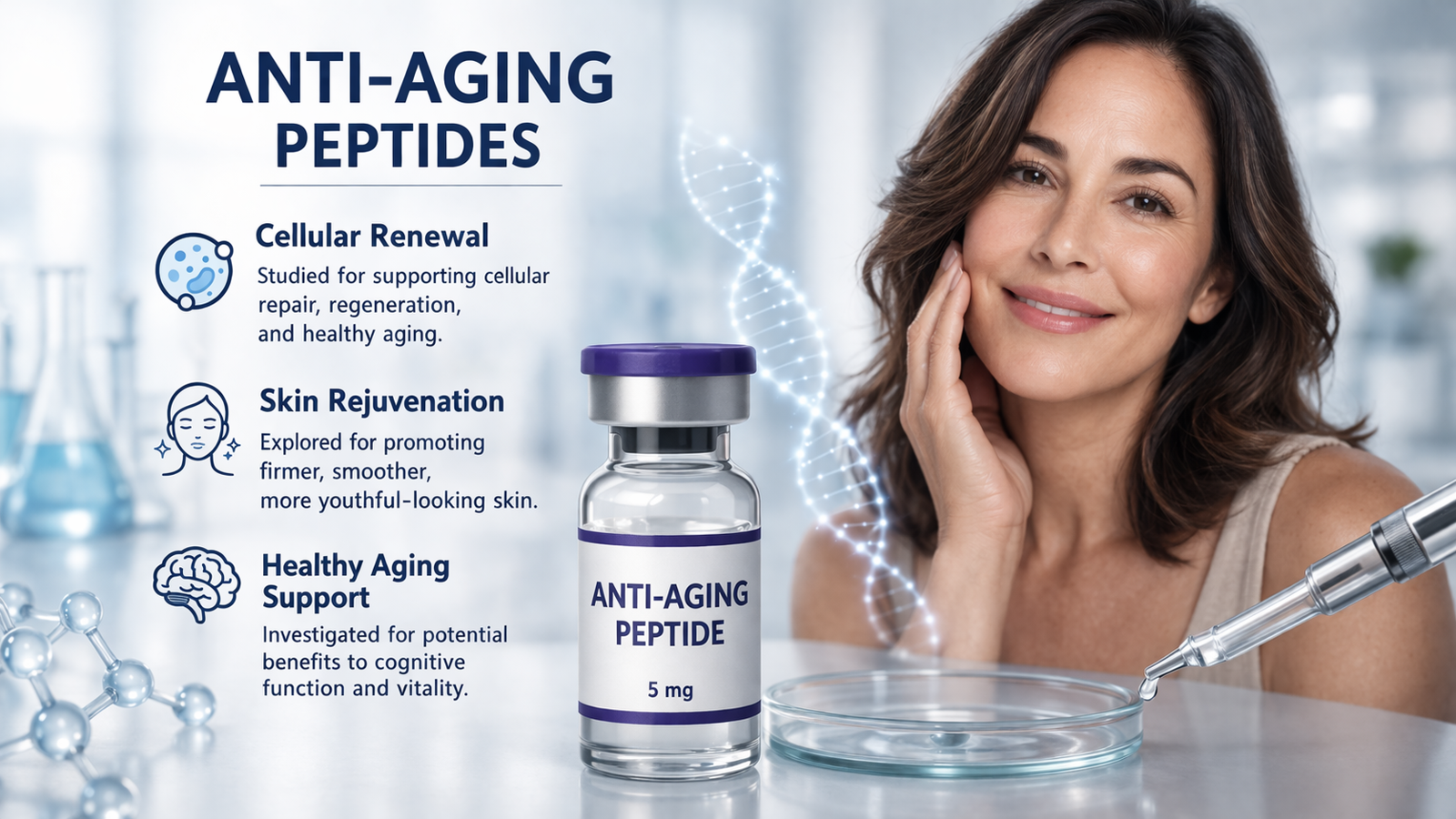
Longevity peptides encompass a broader class of compounds under investigation for their potential effects on cellular lifespan and molecular health in lab models. Researchers study them to understand mechanisms that influence tissue maintenance, DNA repair pathways, and metabolic regulation at the cellular level.
These studies often involve:
Screening multiple peptides to identify molecular targets
Measuring gene expression changes in experimental models
Investigating signaling pathways that correlate with cellular longevity
4. Identifying the Best Peptides for Anti-Aging Research
Selecting the best peptides for anti aging in research settings involves evaluating factors such as purity, experimental documentation, and prior use in peer-reviewed studies. Laboratories prioritize:
Verified peptide sequences and structural integrity
High purity levels confirmed by HPLC or mass spectrometry
Clear documentation for experimental reproducibility
Compatibility with research protocols and molecular targets
Expert insight: Research teams emphasize that using well-characterized peptides significantly reduces variability and enhances reproducibility in cellular and tissue studies.
5. The Role of NAD+ Peptide in Experimental Studies
NAD+ peptide is a specialized compound used in laboratory experiments investigating metabolic and energy-related cellular pathways. Researchers focus on NAD+ peptide to study:
Cellular energy regulation and mitochondrial function
Molecular signaling associated with metabolic processes
Interactions with other longevity-related peptides in controlled models
These studies help scientists gain insights into fundamental mechanisms underlying aging and cellular maintenance.
FAQs About Semax and Epithalon Peptides in Anti-Aging Research
Q1: What is Semax peptide used for in research?
Semax peptide is primarily studied in laboratory models to investigate neural signaling, cognitive pathways, and stress-response mechanisms at the cellular level.
Q2: How does Epithalon peptide contribute to longevity research?
Epithalon peptide is used in controlled experiments to explore telomerase activity, cellular senescence, and molecular markers of aging.
Q3: What are longevity peptides?
Longevity peptides are a class of compounds studied for their potential roles in maintaining cellular health, influencing DNA repair pathways, and supporting tissue integrity in experimental models.
Q4: How do researchers select the best peptides for anti-aging studies?
Selection is based on purity, verified sequences, prior experimental use, and suitability for laboratory protocols to ensure reproducible results.
Q5: What is the significance of NAD+ peptide in experiments?
NAD+ peptide helps researchers study energy regulation, mitochondrial function, and molecular signaling relevant to aging in controlled laboratory settings.
Final Thoughts
Research into semax peptide and epithalon peptide continues to expand, providing laboratories with valuable tools to explore molecular mechanisms of aging and cellular longevity. From longevity peptides to NAD+ peptide, these compounds are central to advancing understanding in anti-aging research.
For researchers seeking high-quality, scientifically validated peptides for laboratory work, Rejuvenate Peptides offers a comprehensive selection designed to support reproducible and precise experimentation.




Write a comment ...